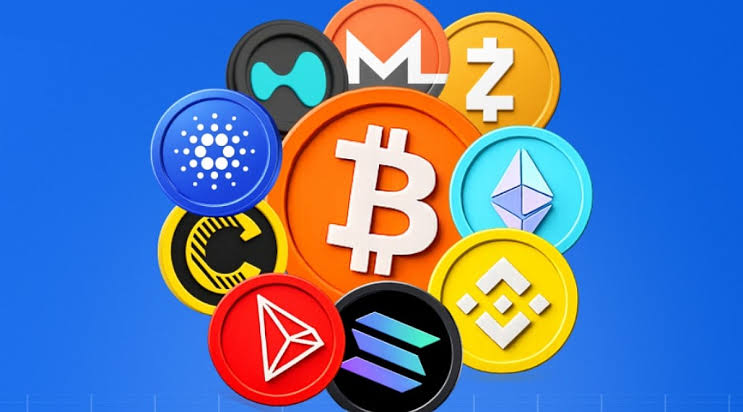
Crypto has always been associated with dramatic moments. Bitcoin rallies capture headlines, altcoin booms create overnight fortunes, and market crashes can erase billions of dollars in value within days. But some of the most important developments in the industry are happening far away from the spotlight.
They are happening in decentralized finance, stablecoins and tokenization.
At first glance, these may appear to be separate corners of the digital asset ecosystem. DeFi is building financial applications on blockchain networks. Stablecoins are creating digital representations of relatively stable currencies. Tokenization is bringing traditional assets onto blockchain infrastructure.
Look closer, however, and a much bigger picture begins to emerge.
These three trends are gradually converging around a common idea: financial activity does not necessarily have to depend on the infrastructure that has supported it for decades.
That does not mean banks, exchanges and traditional financial institutions are about to disappear. In fact, many of them are becoming increasingly involved in blockchain-based systems. The more interesting possibility is that blockchain technology could become an underlying layer of finance without requiring the average person to think about crypto at all.
And that could be the industry’s most important transformation yet.
DeFi Is Learning From Its First Boom
Decentralized finance was one of crypto’s most ambitious experiments.
The concept was straightforward but revolutionary: financial services such as lending, borrowing, trading and asset management could potentially operate through smart contracts rather than relying entirely on traditional intermediaries.
The first major DeFi boom demonstrated just how quickly this model could attract capital. Users moved billions of dollars into protocols searching for yields, liquidity incentives and new financial opportunities.
But the boom also exposed weaknesses.
Some protocols depended heavily on unsustainable incentives. Security vulnerabilities resulted in major losses. Liquidity could disappear quickly when market sentiment changed. In several cases, impressive growth proved difficult to maintain once speculative capital moved elsewhere.
The lessons were expensive, but they were important.
DeFi’s next phase is increasingly focused on sustainability, efficiency and practical use rather than simply maximizing the amount of capital locked inside a protocol. Decentralized exchanges are becoming more sophisticated, lending markets are developing more robust risk mechanisms, and blockchain applications are increasingly being connected to stablecoins and tokenized assets.
That evolution could prove more important than the original DeFi boom.
The first wave demonstrated that decentralized finance was possible.
The next wave has to demonstrate that it can be useful.
Stablecoins Could Become the Glue Holding the Ecosystem Together
If DeFi provides the financial infrastructure, stablecoins could become the medium through which much of that infrastructure operates.
Stablecoins were initially viewed primarily as a convenient way to move dollar-denominated value around crypto markets without converting back into traditional banking systems. Their role, however, has expanded considerably.
Today, stablecoins are increasingly being examined for payments, remittances, cross-border transactions and settlement. Their ability to operate continuously on blockchain networks creates possibilities that conventional financial infrastructure does not always provide as easily.
The scale of institutional attention is becoming harder to ignore.
In September 2026, 21 major financial institutions, including Goldman Sachs, Bank of America, Citi and Deutsche Bank, announced plans to establish a company targeting a U.S.-dollar stablecoin, with a potential launch in the first half of 2027.
The significance goes beyond the individual project.
Financial institutions that once viewed cryptocurrencies primarily through the lens of speculation are increasingly exploring blockchain-based forms of digital money as potential infrastructure.
That distinction matters.
A stablecoin does not need to replace the dollar to transform how dollars move.
It simply needs to make certain forms of transferring, settling and programming dollar-denominated value more efficient.
If that happens at scale, stablecoins could become one of the quietest but most consequential developments in modern finance.
Tokenization Could Bring Traditional Assets Onchain
Then there is tokenization, perhaps the trend with the greatest potential to connect crypto and traditional finance.
The concept is deceptively simple. An asset that traditionally exists through conventional financial infrastructure can be represented digitally on a blockchain.
That could include government bonds, investment funds, equities, real estate and other forms of financial or real-world assets.
Why does that matter?
Because blockchain networks offer characteristics that can potentially change how those assets are issued, transferred and settled.
Transactions can be programmed through smart contracts. Settlement can potentially happen more quickly. Assets can operate around the clock rather than being constrained by traditional market hours. Different financial applications can potentially interact with tokenized assets through shared digital infrastructure.
The World Economic Forum has highlighted tokenization as a major development in the evolution of financial markets and digital assets.
The important point is that tokenization does not require people to abandon traditional assets.
It does something more subtle.
It changes the infrastructure underneath them.
A bond can remain a bond.
A fund can remain a fund.
But the way ownership is recorded, transferred and settled could increasingly happen onchain.
Where DeFi and Tokenization Meet
This is where the story becomes particularly interesting.
Tokenized assets could eventually become collateral inside DeFi applications.
Stablecoins could provide the settlement currency.
Smart contracts could automate transactions.
Decentralized exchanges could facilitate trading.
Suddenly, the three trends are no longer separate.
They become components of a broader financial ecosystem.
Imagine a tokenized bond represented on a blockchain. A stablecoin could be used to purchase it. The asset could then potentially be used as collateral in a decentralized lending protocol. Smart contracts could automate interest payments, collateral requirements or settlement.
Much of this infrastructure already exists in experimental or developing forms.
The challenge is making it secure, compliant, liquid and scalable enough for mainstream use.
That is a considerably harder problem than creating another speculative token.
But if the industry solves it, the economic implications could be enormous.
Crypto’s Biggest Adoption Story May Not Involve Retail Investors
There is an important misconception surrounding mainstream crypto adoption.
Many people imagine adoption as millions of consumers buying cryptocurrencies, downloading wallets and conducting everyday transactions with tokens.
That could happen.
But it is not the only path.
The more transformative scenario may involve blockchain infrastructure becoming invisible.
A customer could invest in a tokenized fund without realizing that the underlying asset is represented on a blockchain. A business could receive a stablecoin payment without considering itself a “crypto company.” A financial institution could settle transactions using blockchain infrastructure while customers continue interacting with familiar banking applications.
In that scenario, blockchain succeeds by becoming less visible.
That may sound counterintuitive.
But many of the world’s most important technologies eventually become background infrastructure. People rarely think about the servers, databases and networking systems supporting the applications they use every day.
Blockchain could follow a similar path.
Regulation Will Determine How Fast the Transition Happens
The technology alone will not determine the future.
Regulation will be equally important.
DeFi faces questions around consumer protection, financial oversight and accountability. Stablecoins face scrutiny concerning reserves, issuers and systemic risk. Tokenized securities raise questions about ownership, settlement, investor rights and compliance.
These issues cannot simply be ignored.
If blockchain-based financial products are going to attract institutional capital, they need to operate within frameworks that large organizations can understand and manage.
That could create a divide within the industry.
Projects built primarily around speculation may struggle as regulatory standards become clearer, while infrastructure designed around transparency, compliance and real economic activity could benefit.
In other words, regulation may not simply determine how large crypto becomes.
It could determine which parts of crypto survive.
The New Crypto Economy May Be Less About Coins
One of the most fascinating possibilities is that the next major phase of crypto could gradually become less focused on cryptocurrencies themselves.
The industry began with digital money.
It expanded into programmable assets.
Then came decentralized financial services, stablecoins, NFTs, tokenized real-world assets and increasingly sophisticated blockchain infrastructure.
The common thread is not necessarily the existence of a particular token.
It is the idea that ownership, money and financial transactions can become programmable.
That could fundamentally change how financial systems operate.
The winners may therefore not always be the projects with the most recognizable tokens. They could be the networks and applications quietly processing transactions, settling assets and connecting different parts of the digital economy.
A Quiet Revolution Could Be Taking Shape
Crypto’s next transformation may not arrive with the explosive excitement of a bull market.
There may be no single token that captures everyone’s attention.
Instead, the change could happen gradually as stablecoins become more useful, DeFi becomes more mature and traditional assets increasingly move onto blockchain networks.
Individually, these developments can appear incremental.
Together, they represent something much larger.
They suggest that blockchain is moving from being primarily an alternative financial system toward becoming infrastructure for a broader digital financial system.
That distinction could define the next decade.
Bitcoin may remain the industry’s most recognizable asset. Speculation will almost certainly remain part of the market. New narratives will continue to emerge.
But beneath those cycles, another story is developing.
DeFi is becoming more sophisticated.
Stablecoins are becoming more practical.
Tokenization is bringing traditional finance closer to blockchain.
And as those pieces begin fitting together, crypto’s future may become less about chasing the next big coin and more about rebuilding the machinery of finance itself.
The irony is that the biggest crypto revolution may not look like crypto at all.
It could simply look like finance working differently.