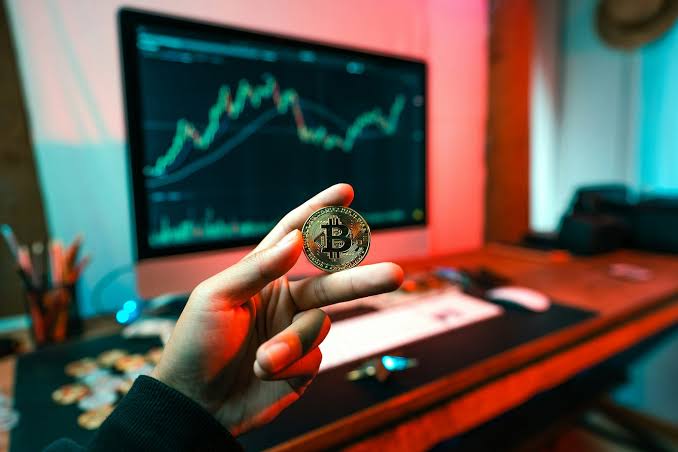
Bitcoin used to be a market where conviction could be measured in years and volatility could be measured in hours.
Buyers talked about decentralization, scarcity and financial freedom. Traders watched every candle. Critics dismissed the asset as speculation. And during every major downturn, the same question returned: had Bitcoin finally reached its limit?
Yet something has changed.
Bitcoin is no longer operating in the same financial environment it occupied during its earlier cycles. The asset has become more accessible through traditional investment products, institutional participation has grown, and its price behavior is increasingly influenced by the same macroeconomic forces that shape other risk assets.
The Bitcoin of today is not necessarily the Bitcoin investors first discovered.
And that creates a fascinating question:
If Bitcoin has matured, have investors matured with it?
Bitcoin Is No Longer an Isolated Market
For much of its early history, Bitcoin existed at the edges of traditional finance.
Buying it required navigating crypto exchanges, wallets and unfamiliar infrastructure. Institutional investors faced additional custody and regulatory complications. For many traditional portfolios, Bitcoin was simply outside the investment universe.
That has changed.
The introduction of U.S. spot Bitcoin exchange-traded products in January 2024 created a familiar investment structure for investors who wanted exposure without directly holding the underlying asset. BlackRock describes digital asset ETFs as a bridge between traditional finance and cryptocurrencies, allowing investors to gain exposure through regulated, exchange-traded vehicles.
That matters because accessibility changes behavior.
An asset that once required specialized knowledge can now sit much closer to conventional portfolio construction.
The result is a Bitcoin market increasingly connected to professional investors, financial advisers and institutional capital.
But greater accessibility comes with a consequence.
Bitcoin now has more sophisticated investors—and more sophisticated expectations.
The “Buy Bitcoin and Forget It” Era Is Being Tested
Bitcoin’s original investment thesis was remarkably simple.
There would only ever be 21 million coins. Monetary supply would be predictable. Adoption could increase. Therefore, long-term scarcity could become increasingly valuable.
That thesis has not disappeared.
But the way investors evaluate Bitcoin has become more complicated.
Investors increasingly consider interest rates, liquidity, institutional flows, regulation, exchange-traded products, correlations with equities and broader economic conditions.
That is partly because Bitcoin itself has become more integrated into the global financial system.
Reuters reported in 2025 that Bitcoin’s correlation with equities had strengthened markedly, with macroeconomic developments such as tariffs and interest-rate expectations contributing to large swings across both crypto and traditional markets.
This creates a strange contradiction.
Bitcoin was designed partly as an alternative to traditional financial systems.
Yet as it becomes more widely owned, it can increasingly behave like another asset inside those systems.
The investor who ignores that evolution may be using an outdated playbook.
Institutional Investors Are Changing the Market
Perhaps the biggest transformation is the growing role of institutions.
Institutional investors do not necessarily approach Bitcoin with the same mindset as early crypto enthusiasts.
A hedge fund may view it through liquidity and volatility.
A portfolio manager may consider its correlation with other assets.
An asset manager may focus on regulated access and custody.
A corporate treasury may think about balance-sheet risk.
Those perspectives can produce very different market behavior from the retail-driven speculation that dominated earlier cycles.
BlackRock’s 2026 investment outlook continues to identify cryptocurrency as a major investment theme and highlights the extraordinary growth of its Bitcoin ETP.
Meanwhile, traditional financial institutions have continued exploring cryptocurrency-related services. JPMorgan, for example, was reported to be assessing cryptocurrency trading services for institutional clients in late 2025.
The message is becoming increasingly difficult to ignore:
Bitcoin is no longer merely asking whether traditional finance will accept it.
Traditional finance is deciding how much of Bitcoin it wants to incorporate.
But Investors May Still Be Behaving Like It Is 2021
Here is where the story becomes more complicated.
Infrastructure can mature faster than investor psychology.
An asset can gain institutional custody, regulated products and deeper liquidity while investors continue making the same emotional mistakes.
Bitcoin remains exceptionally volatile.
When prices rise rapidly, fear of missing out can overpower risk management. When prices fall sharply, conviction can disappear almost as quickly as it arrived.
That cycle has repeated many times.
The technology surrounding Bitcoin may have matured, but human behavior has not necessarily followed.
Investors still chase momentum.
They still overreact to headlines.
They still confuse a rising price with a stronger fundamental thesis.
And they still tend to become most confident after prices have already moved substantially.
That may be one of Bitcoin’s biggest remaining challenges.
The asset is becoming institutional.
The investor base still has to become disciplined.
The New Bitcoin Investor Needs a Different Playbook
As Bitcoin enters a more mature phase, simply believing in its long-term potential may no longer be enough.
Investors increasingly need to understand what actually drives Bitcoin’s market.
Liquidity matters.
Macroeconomic conditions matter.
Position sizing matters.
Regulation matters.
Institutional flows matter.
And, perhaps most importantly, time horizon matters.
A long-term investor and a short-term trader can look at exactly the same Bitcoin chart and reach completely different conclusions.
Neither is necessarily wrong.
The danger comes when investors confuse the two strategies.
Someone buying Bitcoin because they believe in its long-term scarcity should not necessarily panic because of a short-term correction. Likewise, someone trading momentum cannot simply assume that a long-term Bitcoin thesis will protect a poorly timed leveraged position.
The market does not reward confusion between strategy and emotion.
Bitcoin’s Biggest Change May Be Its Role in a Portfolio
Perhaps the most significant evolution is that Bitcoin is increasingly being discussed not only as a cryptocurrency, but as a potential portfolio asset.
That does not mean it has become a traditional safe haven.
It has not.
Bitcoin remains capable of dramatic drawdowns, and its behavior can change significantly across different macroeconomic environments.
But the conversation has become broader.
Instead of asking only, “Will Bitcoin go up?”
Investors can now ask:
What role should Bitcoin play?
Is it a speculative allocation?
A diversification tool?
A long-term scarcity asset?
A hedge against certain monetary risks?
A technology-related investment?
The answer may differ from one portfolio to another.
BlackRock’s 2026 research argues that Bitcoin can still have a role as a portfolio diversifier, even after its substantial rally and subsequent drawdown from its 2025 peak.
That framing is important.
It shifts the conversation away from price predictions and toward portfolio construction.
And that is exactly what happens when an emerging asset begins entering the mainstream.
The Next Bitcoin Cycle Could Test Investor Maturity
Every Bitcoin cycle has created a new group of believers.
But each cycle also exposes weaknesses in investor behavior.
The next phase could be different because Bitcoin now sits inside a much larger financial ecosystem.
There are more institutional products.
There is greater professional involvement.
There is broader regulatory attention.
There are more sophisticated market participants.
And there is far more information available to investors than there was during Bitcoin’s earliest years.
That should, in theory, produce a more rational market.
But markets are not machines.
They are collections of human decisions.
And humans remain remarkably predictable when greed and fear take control.
Bitcoin Has Changed. Investors Have One More Step to Take
Bitcoin’s transformation is undeniable.
It has moved from a niche digital experiment toward an asset that increasingly interacts with traditional finance. Investment access has become easier, institutional participation has expanded, and the conversation surrounding Bitcoin has become considerably more sophisticated.
But maturity is not simply about market capitalization or institutional ownership.
True maturity comes when investors stop asking only how high Bitcoin can go and start asking why they own it in the first place.
That distinction could define the next era.
Because Bitcoin may no longer be the same asset it was a decade ago.
The infrastructure has changed.
The participants have changed.
The market has changed.
Now investors have to change too.
The next Bitcoin revolution may not be about discovering Bitcoin.
It may be about finally learning how to invest in it.