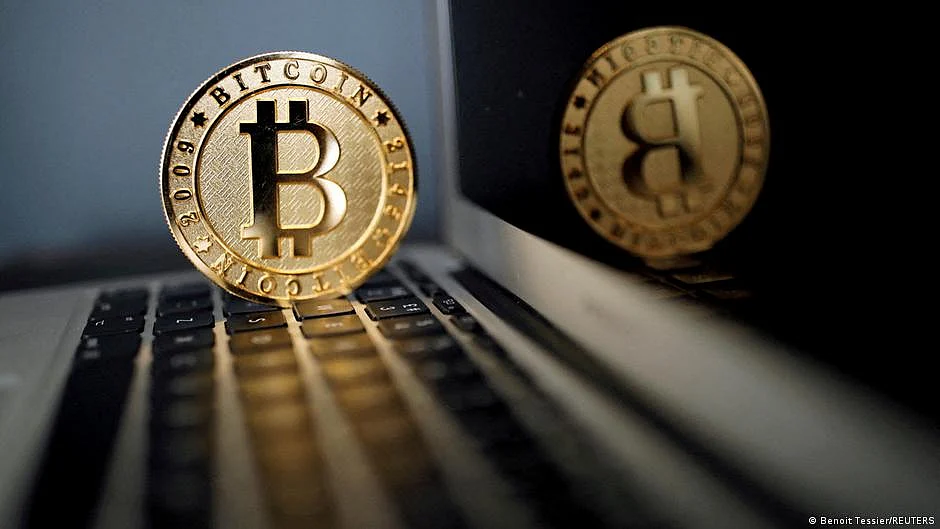
For months, Bitcoin and the broader crypto market have been trying to prove that they can stand on their own.
Now, the global economy is reminding investors that crypto does not exist in isolation.
Bitcoin’s latest weakness is unfolding against a backdrop of rising oil prices, higher Treasury yields and growing expectations that interest rates could remain elevated—or even move higher in some major economies. The result is a familiar but increasingly important shift in investor behavior: risk appetite is cooling, and crypto is feeling the pressure.
Bitcoin has fallen sharply from the levels it reached during its recent rally, while Ethereum and other major digital assets have also struggled to maintain momentum. The move has prompted investors to reassess whether the crypto market’s earlier strength can survive a more difficult macroeconomic environment.
The bigger question is no longer simply where Bitcoin goes next.
It is whether the market has entered a period where interest rates, inflation and global liquidity once again become the dominant forces driving digital assets.
The Rate-Hike Story Is Back
For crypto investors, interest rates have always mattered.
When borrowing costs are low and liquidity is abundant, investors tend to have more appetite for assets perceived as risky. Capital flows toward equities, technology stocks, cryptocurrencies and other growth-oriented investments.
When interest rates rise, the calculation changes.
Cash and government bonds become more attractive.
Borrowing becomes more expensive.
Liquidity can tighten.
And speculative assets face a higher hurdle.
That is why renewed expectations of rate increases are attracting so much attention from crypto traders.
Recent market conditions have seen expectations for tighter monetary policy rise as energy prices climb and inflation concerns return. Higher oil prices can feed into broader inflation, potentially making central banks more cautious about cutting rates or even forcing markets to consider the possibility of additional tightening.
For Bitcoin, that is an uncomfortable combination.
Bitcoin Is Facing a Different Kind of Pressure
Bitcoin’s latest pullback is important because it comes after a period of considerable strength.
The cryptocurrency had managed to recover from earlier weakness and attract renewed investor attention.
But the market’s tone has changed.
Instead of chasing momentum, traders are increasingly asking whether the macroeconomic environment can support another sustained move higher.
That distinction matters.
A market driven primarily by crypto-specific optimism can sometimes ignore unfavorable economic signals.
A market driven by liquidity is less forgiving.
When Treasury yields rise, investors have another place to put capital.
When expectations for interest-rate cuts decline, the opportunity cost of holding volatile assets increases.
And when uncertainty rises, investors often reduce exposure to the most speculative parts of their portfolios first.
Crypto sits near the front of that risk spectrum.
Treasury Yields Are Sending a Signal
One of the most important indicators for Bitcoin investors right now may not be found on a crypto chart.
It may be found in the bond market.
U.S. Treasury yields have moved higher as markets reassess the path of monetary policy. That creates a challenging environment for risk assets because higher yields increase the relative attractiveness of traditional fixed-income investments.
This does not automatically mean Bitcoin must fall.
But it changes the equation.
A year ago, an investor might have looked at Bitcoin and thought about its potential upside.
Today, that same investor may also compare it with the return available from government debt.
The higher those relatively low-risk yields become, the more compelling that comparison gets.
That is one reason macroeconomic developments can have an outsized influence on crypto sentiment.
Oil Prices Have Become an Unexpected Crypto Variable
Oil may seem far removed from Bitcoin.
It is not.
Energy prices influence inflation.
Inflation influences monetary policy.
Monetary policy influences liquidity.
Liquidity influences risk appetite.
And risk appetite influences crypto.
That chain can be surprisingly powerful.
When crude oil prices rise sharply, markets begin considering whether higher energy costs could keep inflation elevated for longer.
If inflation remains stubborn, central banks may have less room to reduce interest rates.
That possibility can quickly change expectations across financial markets.
For crypto, the problem is straightforward.
Bitcoin generally benefits from an environment where investors are comfortable taking risk and liquidity is plentiful.
A prolonged inflation and rate environment could create almost the opposite conditions.
The Fed Factor Remains Crucial
The U.S. Federal Reserve remains central to the conversation.
Markets are constantly trying to anticipate what the Fed will do next.
Will rates remain unchanged?
Will policymakers eventually cut?
Could inflation force them to keep policy restrictive for longer?
Or could another inflationary shock eventually put rate hikes back on the table?
Each possibility can move markets.
Crypto traders therefore have another reason to watch economic data closely.
Inflation reports.
Employment numbers.
Consumer spending.
Wage growth.
Oil prices.
Treasury yields.
All of these can influence expectations surrounding monetary policy.
And expectations can move Bitcoin before the policy itself changes.
Bitcoin Is Becoming More Sensitive to Macro Conditions
There was a time when Bitcoin was primarily viewed as a niche digital asset driven by its own ecosystem.
That has changed.
As institutional participation has expanded and Bitcoin has become increasingly connected to global financial markets, its sensitivity to macroeconomic conditions has also increased.
That creates both opportunities and risks.
Institutional capital can provide deeper liquidity and broader adoption.
But institutional investors also respond to interest rates, bond yields, inflation and portfolio risk.
Bitcoin’s growing integration into traditional markets therefore means it cannot completely escape traditional market forces.
The irony is hard to miss.
The more mainstream Bitcoin becomes, the more closely it can behave like the markets it originally sought to operate outside of.
Altcoins May Feel the Pressure Even More
If Bitcoin is struggling, the impact on altcoins can be even more severe.
Smaller digital assets generally carry greater volatility and lower liquidity than Bitcoin.
When investors become cautious, they often reduce exposure to those assets first.
That means a macro-driven risk-off environment could interrupt the recent signs of life across the altcoin market.
Ethereum, Solana and other major assets may continue to attract interest, particularly where network activity and institutional narratives remain strong.
But smaller tokens could face a much tougher environment.
The result could be increased market concentration around Bitcoin and a handful of established digital assets.
This Does Not Necessarily Mean the Bull Case Is Dead
It would be easy to look at rising yields and conclude that Bitcoin’s bullish cycle is over.
That would be premature.
Markets rarely move in straight lines.
A period of weakness does not automatically invalidate the broader trend.
Bitcoin can recover if inflation concerns ease, oil prices stabilize or expectations for monetary easing return.
Institutional demand could also provide support.
And if investors begin viewing Bitcoin as a long-term strategic asset rather than simply a speculative trade, short-term macro pressure may have less influence over time.
The key issue is duration.
A temporary increase in rate expectations may create volatility.
A prolonged period of restrictive monetary policy could create a much deeper challenge.
The Liquidity Question Is Becoming More Important
Perhaps the most important word in the current market is liquidity.
Crypto thrives when capital is available.
When liquidity expands, investors are more willing to search for returns.
When liquidity contracts, capital becomes selective.
That does not mean investors abandon crypto entirely.
Instead, they may move toward assets with stronger liquidity, established networks and clearer investment narratives.
This could explain why Bitcoin continues to command such a large share of crypto market attention even when the broader market struggles.
In uncertain conditions, investors often move toward what they perceive as the strongest part of the risk spectrum.
Within crypto, Bitcoin remains that asset for many participants.
Could Bitcoin Become a Beneficiary Later?
There is another side to the story.
Bitcoin’s long-term narrative has increasingly focused on its limited supply and potential role as an alternative asset.
If inflation remains elevated and confidence in traditional monetary systems weakens, some investors may eventually return to Bitcoin for precisely those reasons.
That creates an interesting tension.
In the short term, higher rates can pressure Bitcoin.
In the longer term, persistent monetary uncertainty can strengthen some of the arguments behind Bitcoin ownership.
The market therefore has two competing narratives operating simultaneously.
One is liquidity-driven.
The other is scarcity-driven.
Which narrative dominates could depend heavily on the global economic environment.
Investors Are Watching More Than Price
The most sophisticated crypto investors are unlikely to focus exclusively on Bitcoin’s daily price.
They are watching the surrounding signals.
Are Treasury yields continuing higher?
Are inflation expectations increasing?
Is oil remaining elevated?
Are central banks becoming more hawkish?
Is the dollar strengthening?
Are investors moving toward safer assets?
Are crypto exchange volumes rising or falling?
These indicators can provide clues about whether the latest weakness is simply a correction or the beginning of a more persistent risk-off phase.
Volatility Could Become the New Normal
One consequence of the current uncertainty is that volatility could remain elevated.
Bitcoin may react sharply to economic data.
A stronger-than-expected inflation reading could trigger another selloff.
A weaker inflation report could produce a relief rally.
A change in central-bank language could move markets within minutes.
That environment can create opportunities—but it can also punish excessive leverage.
For traders, position sizing and risk management may become increasingly important.
For long-term investors, the bigger question is whether the underlying thesis remains intact despite short-term volatility.
Those are very different strategies.
The Next Major Signal Could Come From Central Banks
The crypto market may therefore be entering a waiting game.
Investors are looking for clues about what central banks will do next.
If policymakers signal that inflation is under control and rate cuts remain possible, risk appetite could return quickly.
If they indicate that inflation remains a concern and tighter policy may be necessary, Bitcoin could face additional pressure.
This makes upcoming economic data particularly important.
The market does not need an actual rate hike to react.
It only needs the expectation of one.
Why This Moment Matters
Crypto has spent years developing its own ecosystem.
But its increasing integration with global finance means macroeconomic conditions are becoming impossible to ignore.
Bitcoin is no longer trading in a vacuum.
It is trading alongside equities, bonds, currencies and commodities.
When those markets shift, crypto can feel the consequences.
That is not necessarily a weakness.
It is evidence of how much the digital-asset market has grown.
The challenge is learning how to navigate the new reality.
A Market at a Crossroads
The current environment leaves Bitcoin at an interesting crossroads.
On one side is the long-term case for digital assets, institutional adoption, scarcity and expanding blockchain infrastructure.
On the other is a more difficult macroeconomic environment characterized by higher yields, inflation concerns and uncertainty over monetary policy.
Neither narrative has won.
That is why the next few weeks could be particularly revealing.
If Bitcoin stabilizes despite rising rate expectations, it could demonstrate that the market has developed greater resilience.
If it continues falling as liquidity tightens, investors may need to reconsider how much of the recent rally was driven by favorable financial conditions.
The Bigger Picture
The latest caution in crypto markets is not simply about Bitcoin.
It is about the relationship between digital assets and the global economy.
For years, investors could sometimes treat crypto as a separate story.
That era is fading.
Bitcoin is increasingly influenced by the same forces that move other major asset classes.
Interest rates matter.
Bond yields matter.
Inflation matters.
Liquidity matters.
And now, even oil prices can become part of the Bitcoin conversation.
That makes the market more complicated—but also more mature.
The days when a single crypto narrative could dominate everything are becoming less common.
What Comes Next?
The biggest question is whether the current pressure represents a temporary reset or the beginning of a more prolonged risk-off period.
If rate-hike expectations fade and inflation pressures ease, Bitcoin could regain momentum surprisingly quickly.
If yields continue rising and central banks remain firmly focused on controlling inflation, the market could face a much longer period of consolidation.
Either way, investors should not underestimate the importance of the macroeconomic backdrop.
Bitcoin’s next major move may not be decided by a new blockchain upgrade, a whale transaction or even a crypto-specific headline.
It could be decided by something much larger:
the price of money itself.
And as markets turn more cautious, that may be the signal Bitcoin investors need to watch most closely.